
7-minute read · By the Step Balance Research Team
The first time you lie on an acupressure mat, the sensation is sharp and surprising. That is normal, and it eases fast. Here is how to use an acupressure mat in your first sessions: how to lie down, how long to stay, what to expect and how to build up over two weeks.
An acupressure mat is a tool for relaxation and wellbeing, not a treatment for any condition. The trials we cite used other mats, so we use them only to describe sensations, session lengths and exclusions. For the full evidence, read Acupressure mats: what the research says.
In 30 seconds
- Start short and soft. Try 5-10 minutes on a bed, in a thin T-shirt: our suggestion, below the 15-60 minutes a day used in trials [2][3][4].
- The prickling peaks fast. In one study it peaked within about 30 seconds, then eased [1]; trials saw discomfort mainly in the first sessions [3][4].
- Breathe slowly. Fewer than 10 breaths a minute is linked to feeling relaxed [7][8]; in a controlled study, a mat added nothing over relaxing without one [5].
- Some people should ask first. Trials excluded pregnancy, bleeding disorders, blood thinners, diabetes and skin problems [3][4]; reduced feeling in the feet matters too [13].
Who should not use an acupressure mat without advice
Mat studies excluded these groups [3][4]. If one applies to you, ask a doctor, pharmacist or physiotherapist first:
- Pregnancy [4].
- A bleeding or clotting disorder, or blood-thinning medicine [3][4].
- Long-term corticosteroids, which can thin the skin [3].
- Diabetes, especially with reduced feeling in the feet [3][4]: it is the most common cause of peripheral neuropathy in the UK [13], so you may not notice when pressure is too much.
- Broken or irritated skin, eczema, psoriasis, sunburn or a recent tattoo where the mat touches [3][4].
- Unexplained pain, a recent injury or operation, numbness or weakness: these need assessment, not a mat [3].
- A condition that changes how you feel pain [4].
- Pillow only: buckwheat allergy, asthma, or allergy to peanut, latex, coconut, quinoa or poppy seed [9][11].
Our mats are for adults. No study has examined the risks of spike mats specifically [2], so keep sessions moderate.
How to use an acupressure mat for the first time
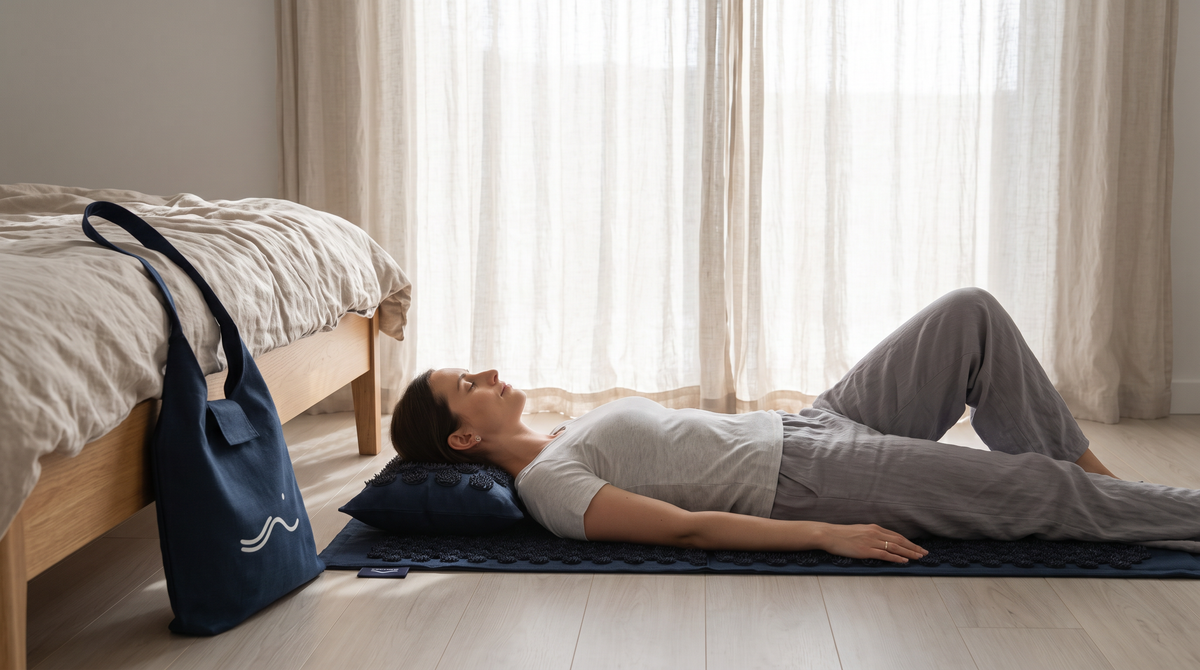
- Choose a soft base. Lay the mat on a bed or a folded blanket, as one trial advised [3]. Unfold the AcuNomad fully; with the AcuEarth, put the pillow under your neck.
- Keep a thin T-shirt on. One trial had people start with a shirt between skin and mat [4].
- Lower yourself slowly. Sit on the edge, roll your back down gradually and spread your weight evenly.
- Breathe slowly. 4 seconds in, 6 seconds out: six breaths a minute, within the range studied [7][8].
- Stay 5-10 minutes. Our suggestion, deliberately below the 15-60 minutes a day used in trials [2][3][4].
- Get up sideways. Roll onto your side, then push up.
- Check your skin. Redness and spike marks are expected; broken skin is not.

Why slow breathing matters
Slow breathing is the best-supported part. Fewer than 10 breaths a minute is linked to higher heart-rate variability and to feeling relaxed [7], and in a meta-analysis of 223 studies, parasympathetic (rest-and-digest) markers rose during and after slow breathing [8]. On the mat, heart rate slowed, but blood pressure rose slightly and cortisol did not change [1]. In a controlled study, relaxing without a mat helped just as much [5]: taking time to relax is what counts.
Is an acupressure mat supposed to hurt? What you will feel
What is normal
Expect sharp prickling as you lie down. In 32 healthy adults it peaked within about 30 seconds, then eased [1]; another trial warned that the first 2 to 5 minutes could be painful [3]. Warmth often follows [1]. Temporary redness and spike imprints are expected; no study has measured how long they last. Nobody in the trials had to stop a session because of discomfort [3][4].
When to stop
Get up calmly if you notice any of these, and see a healthcare professional if it persists:
- Pain that keeps rising instead of easing.
- Dizziness or feeling faint.
- Broken or bleeding skin.
- A lasting rash or itching.
- Lasting numbness or tingling.
How long to lie on an acupressure mat: a two-week build-up
No study has defined an ideal session length [3]. Research used 15 minutes a day for three weeks [2], about 30 minutes a day for two weeks [3] and 60 minutes a day alongside exercise [4]. Our build-up starts well below:
| Days | Base | Layer | Time | Note |
|---|---|---|---|---|
| 1-3 | Bed or blanket | Thin T-shirt | 5-10 min | Slow breathing [7][8] |
| 4-7 | Bed or blanket | Bare skin if comfortable | 10-15 min | One trial used 15 min a day [2] |
| 8-14 | Firmer surface optional | Bare skin | 15-20 min | Towards the 30 min of one trial [3] |
| After week 2 | Your choice | Your choice | 15-30 min a day | 60 min was the longest studied [4] |
Move on only when a step feels easy; go back if your skin is sore. Longer is not shown to be better [3], and nobody has tested sleeping on a mat overnight.
Acupressure mat positions: back, neck and feet
For the back, place the mat from your shoulders to your lower back, with knees bent if that is easier.
Neck
Support the neck so the head does not drop back; one trial used a towel roll [3]. The AcuNomad has a built-in raised neck rest; the AcuEarth pillow adds 1,475 spikes. Too intense? Cover it with a thin cloth.
Feet, seated or standing
Seated is the gentlest start; one trial used 10 minutes seated with the feet on the pad [3]. Standing puts your whole weight on far fewer spikes: keep it to a minute or two and hold onto something. See also our 5-minute routine for tired feet, the desk-day reset for feet and legs and foot roller vs massage ball vs foam roller.

Hygiene and care: the mat and the buckwheat pillow
Use your own mat and keep it dry. To freshen it, wipe it with a slightly damp cloth and let it air-dry fully before folding: mold needs moisture, and the US EPA advises drying damp items within 24-48 hours [12]. For the cover, follow the care label and our care page.
How to clean a buckwheat pillow
No independent research covers washing these pillows; the advice not to wash the hulls comes from manufacturers. Follow the care label:
- Never soak or machine-wash the filling; wash a removable cover only if the label allows.
- Air it often in a dry room, with indoor humidity below 60% [12].
- If it gets wet, dry it within 24-48 hours or replace the hulls; discard musty or moldy hulls [12].
- Use a washable pillowcase: dust-mite allergen built up on buckwheat pillows within three months, as on synthetic ones [10].
Buckwheat can cause allergy, and hull pillows are a documented exposure route [9]; in one case report, asthma cleared once two were removed [11]. If you are allergic or have asthma, skip the pillow and ask your doctor.
AcuNomad or AcuEarth: where our mats fit in
Neither of our mats was used in the studies above. They differ mainly in where you will use them.
| AcuNomad foldable acupressure mat | AcuEarth acupressure set | |
|---|---|---|
| Made for | Travel, small spaces, the office | Home use, bed or floor |
| Mat size | 73 × 46 cm, folds in three | 75 × 44 cm |
| Spikes | 5,400 ABS spikes | 5,250 on the mat, 1,475 on the pillow (6,725 in total) |
| Neck support | Built-in raised neck rest | 40 × 30 cm pillow, buckwheat-hull filling (750 g) |
| Materials | Cotton cover over high-density foam | Linen and cotton cover, coconut-fiber filling |
| Weight and extras | 702 g | Linen carry bag; plain cardboard box, no plastic |
Choose the AcuNomad foldable acupressure mat for a light mat that folds into a bag, neck rest included. Choose the AcuEarth acupressure set for a home routine with natural materials and a separate pillow. For what studies found, see our research guide to acupressure mats.

Frequently asked questions
How long should I lie on an acupressure mat the first time?
About 5-10 minutes, on a bed, in a thin T-shirt; studies later used 15-60 minutes a day [2][3][4].
Is an acupressure mat supposed to hurt?
A sharp prickling at first is normal and usually eases within minutes [1][3][4]. Rising pain, broken skin or dizziness means stop.
Why is my skin red after using the mat?
Temporary redness, spike marks and warmth are expected [1]; how long they last has not been measured. Broken skin or a lasting rash is not normal: stop and get advice.
Can I use an acupressure mat every day?
Trials used daily sessions for two to three weeks without serious adverse effects [2][3][4], though risks were never studied specifically [2]. Rest if your skin is sore.
Can I use an acupressure mat before bed?
Yes, but get off before you fall asleep. It is not a sleep aid: one trial found no change in sleep quality [2], in another sleep improved as much without a mat [5], and a third exists only as a conference abstract [6].
Sources
- Olsson EMG, von Schéele B. Relaxing on a bed of nails: an exploratory study of the effects on the autonomic, cardiovascular, and respiratory systems, and saliva cortisol. Journal of Alternative and Complementary Medicine. 2011;17(1):5-12. doi:10.1089/acm.2010.0135
- Kjellgren A, Erdefelt K, Werngren L, Norlander T. Does relaxation on a bed of nails (spike mat) induce beneficial effects? A randomized controlled pilot study. Alternative Medicine Studies. 2011;1(1):e5. doi:10.4081/ams.2011.e5
- Hohmann C, Ullrich I, Lauche R, et al. The benefit of a mechanical needle stimulation pad in patients with chronic neck and lower back pain: two randomized controlled pilot studies. Evidence-Based Complementary and Alternative Medicine. 2012;2012:753583. doi:10.1155/2012/753583
- Frizziero A, Finotti P, La Scala C, et al. Efficacy of an acupressure mat in association with therapeutic exercise in the management of chronic low back pain: a prospective randomized controlled study. Applied Sciences. 2021;11(11):5211. doi:10.3390/app11115211
- Kisker J, Schöne B. Regular use of acupressure mats reduces perceived stress at subjective but not psychophysiological levels: insights from a three-week relaxation training. Applied Psychology: Health and Well-Being. 2024;16(1):338-355. doi:10.1111/aphw.12490
- Ceylan S, Gönenç İM, İnan Kırmızıgül E. Investigating the effect of an acupressure mat on perceived stress, sleep quality, and premenstrual symptoms in individuals with premenstrual syndrome: a randomized controlled trial. Conference abstract, 33rd World Congress on Controversies in Obstetrics, Gynecology & Infertility (COGI), Rome. 2025. Ankara University record
- Zaccaro A, Piarulli A, Laurino M, et al. How breath-control can change your life: a systematic review on psycho-physiological correlates of slow breathing. Frontiers in Human Neuroscience. 2018;12:353. doi:10.3389/fnhum.2018.00353
- Laborde S, Allen MS, Borges U, et al. Effects of voluntary slow breathing on heart rate and heart rate variability: a systematic review and a meta-analysis. Neuroscience & Biobehavioral Reviews. 2022;138:104711. doi:10.1016/j.neubiorev.2022.104711
- Norbäck D, Wieslander G. A review on epidemiological and clinical studies on buckwheat allergy. Plants (Basel). 2021;10(3):607. doi:10.3390/plants10030607
- Nam HS, Park CS, Crane J, Siebers R. Endotoxin and house dust mite allergen levels on synthetic and buckwheat pillows. Journal of Korean Medical Science. 2004;19(4):505-508. doi:10.3346/jkms.2004.19.4.505
- Fritz SB, Gold BL. Buckwheat pillow-induced asthma and allergic rhinitis. Annals of Allergy, Asthma & Immunology. 2003;90(3):355-358. doi:10.1016/S1081-1206(10)61807-8
- US Environmental Protection Agency. A brief guide to mold, moisture and your home. Web page, updated 2026. epa.gov
- NHS. Peripheral neuropathy: overview. Web page, reviewed 2022. nhs.uk
About this guide. Prepared by the Step Balance Research Team, the in-house product and research group behind our insoles, compression supports and recovery tools, designed in Spain. Product details come from our own specifications; statements about acupressure mats, slow breathing and buckwheat pillows come from the sources listed above. This guide is for information only and does not replace advice from a healthcare professional.
 MuscleGlide™ Wooden Recovery Stick
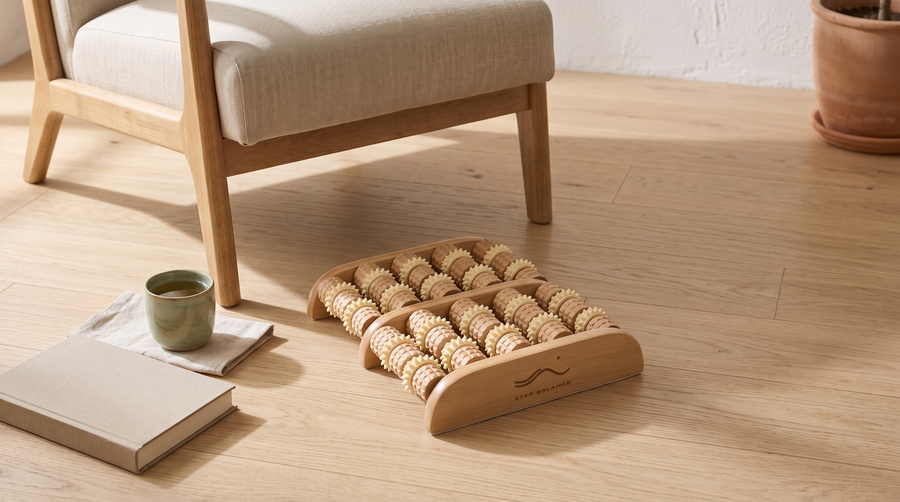
 ReflexRoll™ Wooden Foot Massager
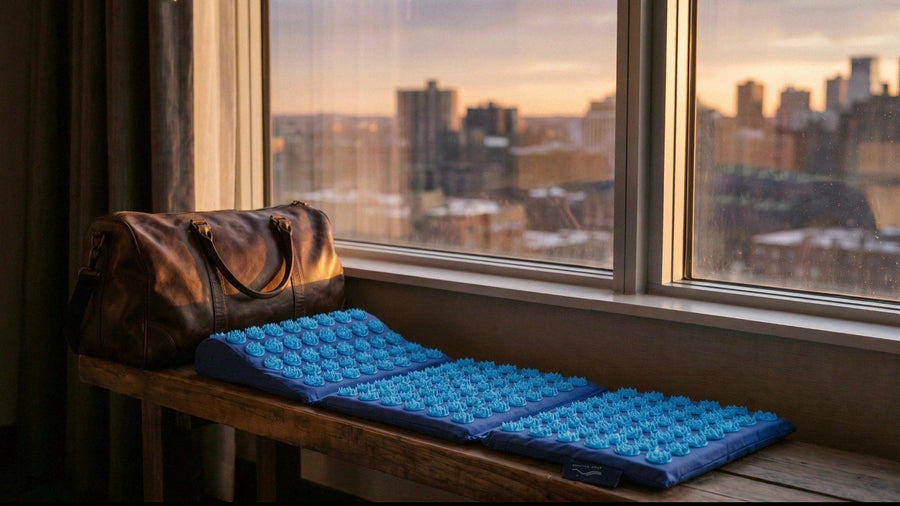
 AcuNomad™ Foldable Acupressure Mat
 AcuEarth™ Acupressure Set