
Squats, lunges, deadlifts, presses, push-ups, HIIT and cycling classes ask a lot of your knees, wrists, elbows and feet. Here is where our knee sleeves, wrist and elbow sleeves, insoles and recovery tools fit into gym and strength training, and how to get the size right.
In 30 seconds
- Knee sleeves for squats and lunges: snug knit compression. Gel or plain is a matter of feel. Neither is a brace.
- Wrist and elbow sleeves for pressing and pulling: light, seamless knit that moves with you.
- Sports Performance insoles for training shoes. In flat, snug lifting shoes, check the fit first.
- Recovery: the MuscleGlide for your legs, the ReflexRoll for the soles of your feet.
What gym training asks of your knees, wrists, elbows and feet
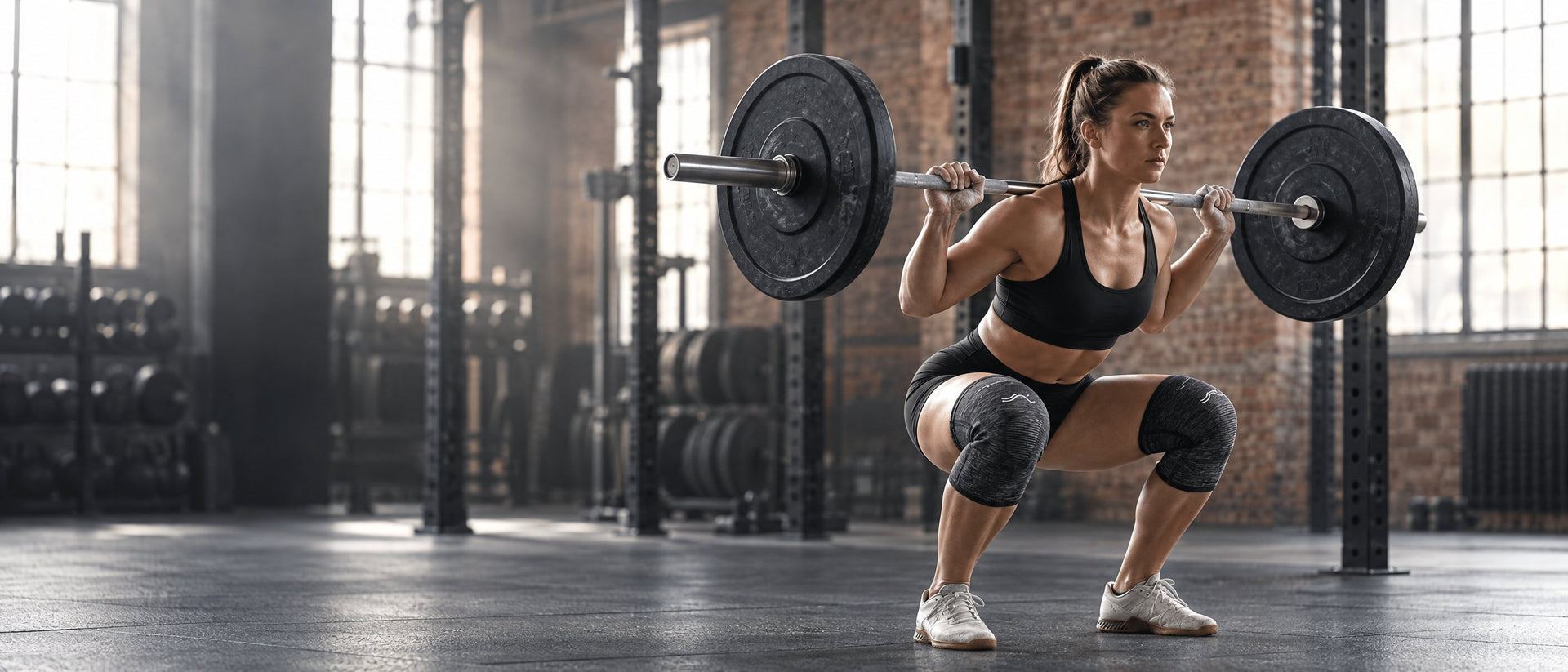
Strength training repeats the same patterns. Knees bend deeply under load in squats and lunges. Wrists bend back under weight in presses and push-ups. Elbows bend and straighten through every press, row and pull. Feet are the base for all of it, and in HIIT and box jumps they land again and again.
Most of what keeps training comfortable is not gear: warm up, build load gradually, keep your technique clean and rest. If something hurts and does not settle, see a healthcare professional rather than reaching for a product.
Knee sleeves for squats and lunges
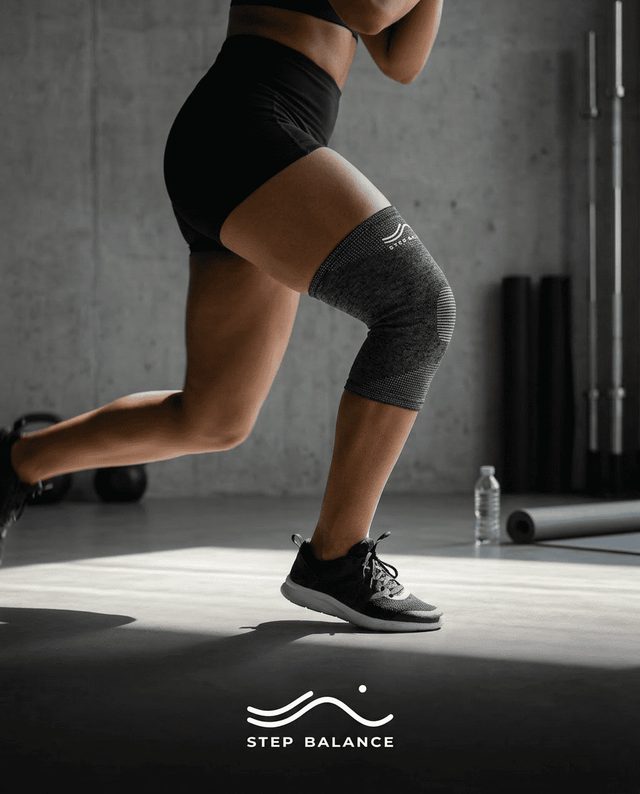
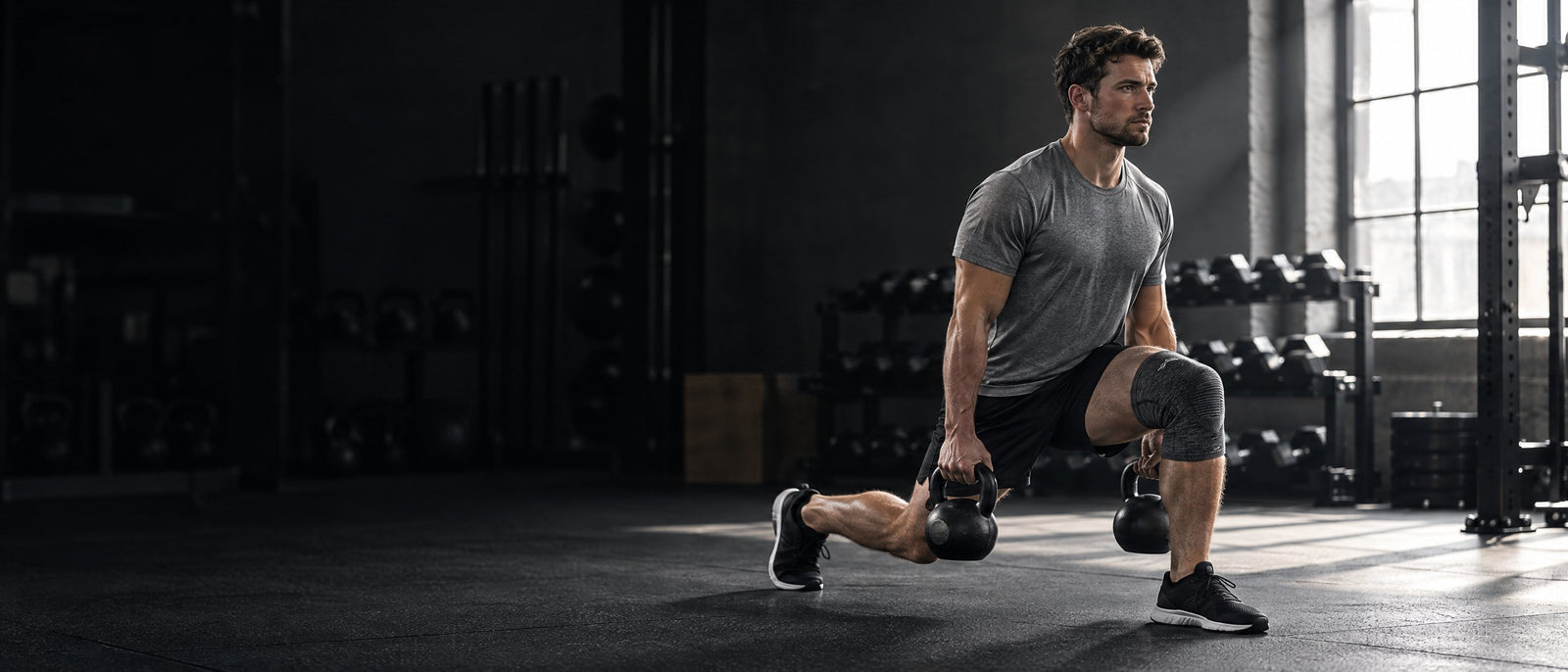
Many lifters like a knee sleeve for leg day: a snug knit sleeve with even compression. Our Knee Support Sleeve and Gel Knee Support Sleeve are knitted in the round as one seamless tube, with four-way stretch and latex-free TPU bands inside that help them stay in place.
Gel knee sleeve or plain knee sleeve?
The difference is at the front. The gel sleeve has a soft TPR gel ring inside the knit that sits around the kneecap; from the outside you see a lighter knitted oval. Many people like that cushioned frame at the bottom of a squat. The plain sleeve has a smooth, low profile for long sets, walking lunges and cycling classes. Both work in the gym, so choose by feel. Our guide gel knee sleeve or plain knee sleeve compares them sport by sport.
A sleeve, not a brace
Neither sleeve has hinges, stays or straps, and neither holds the knee mechanically. For the research, read knee compression sleeves: what they do and what they don’t.
Wrist and elbow sleeves for pressing and pulling
Wrist sleeve for the gym
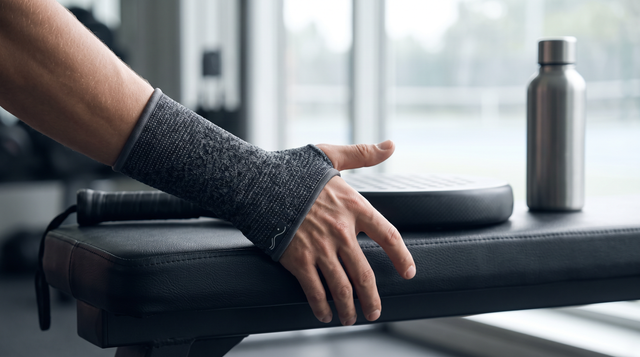
Bench press, push-ups and kettlebell work load the wrist with the hand bent back. Our Wrist Support Sleeve is a light compression sleeve with a thumb opening that keeps it in place. It feels snug without limiting movement, and it is not a stiff wrist wrap. More in our wrist support guide.
Elbow sleeve for strength training
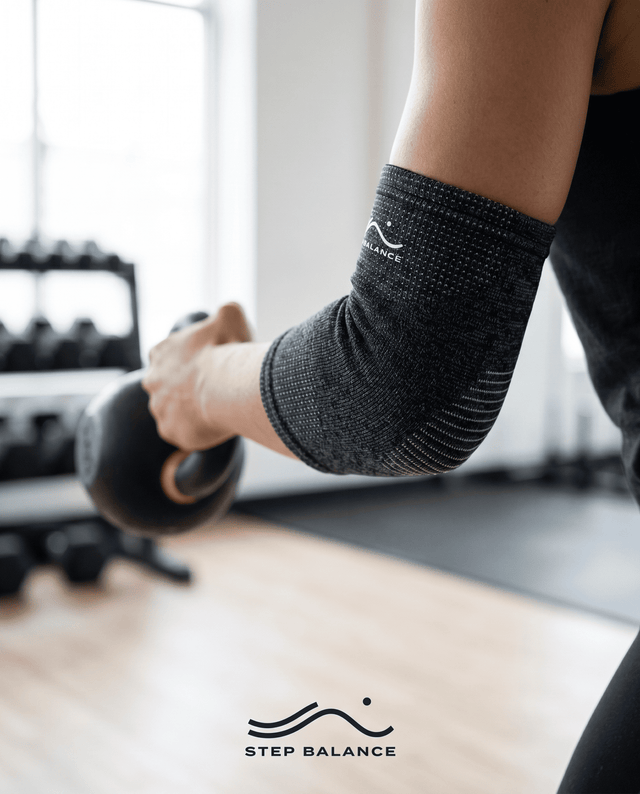
Rows, pull-ups and curls bend and straighten the elbow again and again. Our Elbow Support Sleeve adds even compression in the same seamless knit. The fit advice in our elbow support guide applies in the gym too.
Insoles for training shoes
For training shoes, cross-trainers and the sneakers you wear to classes, our Sports Performance insoles are the ones to choose. They are 4.5-5 mm thick, with a breathable microfiber top, full-length high-rebound EVA and a 2 mm anatomic TPU shell with arch and metatarsal support molded in. They feel responsive in jumps and firm when you lift.
Take the factory insole out and compare outlines before you put ours in. Flat lifting shoes and indoor cycling shoes are often snug, so check the fit before a heavy session: your heel should sit down and your toes should not feel pressed. If room is tight, our Slim Fit insoles are the thinner option at 3-3.5 mm. The firm shell takes a few days to get used to; our break-in guide explains what is normal.
Sizes are whole EU 36-45, sold in pairs. If you wear a half size, choose the size below. The insole finder suggests a model in about 30 seconds, and insole size and fit and how to choose the right insole go into detail.
Recovery between sessions
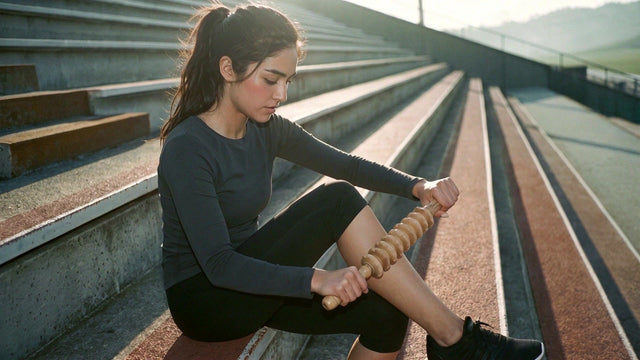
After leg day, many people like a few minutes of rolling. Our MuscleGlide wooden massage stick is 38.4 cm long and weighs 240 g, with nine gear-cut Schima wood rings on a steel axle. You set the pressure with your hands on calves and thighs, and it fits in a gym bag. Try our massage-stick routine, and see our comparisons of massage sticks, massage guns and foam rollers and of wooden and foam rollers for the research.
For the soles of your feet, the ReflexRoll wooden foot roller is used seated: 29 cm long, with 50 rollers in two channels, half smooth wood and half with textured spikes.
For rest days, our AcuNomad foldable acupressure mat folds into a bag, and the AcuEarth acupressure set adds a pillow for home. Do not use an acupressure mat on broken or irritated skin, and check with a healthcare professional first if you are pregnant or have a circulatory or skin condition.
Getting the size right
Measure with a soft tape first: each product has its own chart.
| Product | How to measure | S | M | L |
|---|---|---|---|---|
| Knee Support Sleeve | Around the center of the knee | 30-38 cm | 38-47 cm | 47-55 cm |
| Gel Knee Support Sleeve | Around the center of the knee | 30-40 cm | 40-50 cm | 50-55 cm |
| Wrist Support Sleeve | At the narrowest point of the wrist | 13-15 cm | 15-20 cm | 20-25 cm |
| Elbow Support Sleeve | Around the elbow (see our measuring guide) | 18-23 cm | 23-27 cm | 27-34 cm |
| Ankle Support Sleeve | By EU shoe size | 36-38 | 39-41 | 42-45 |
Between two sizes, choose the larger. One finger should slide under the fabric. If you feel tingling or numbness, take it off and try the next size up. The Ankle Support Sleeve, popular for jumps and cross-training, goes on like a sock. The size calculator needs one measurement, our measuring guide shows each step, and the size guides hold every chart. Still deciding? See our comparison, which one is right for you.
Gym guides
Short reads for strength training and fitness classes. All of them are in our guides library.
-
Wrist support for the gym, padel and desk work: what helps
Sleeve or wrap, and when each helps. -
Gel knee sleeve or plain knee sleeve: which one for your sport?
The two knee sleeves, sport by sport. -
Knee compression sleeves: what they do and what they don't
Feel, fit and compression. -
Massage stick, massage gun or foam roller? What the research says
Three recovery tools compared. -
Wooden roller or foam roller? What the research says
What wood changes. -
How to choose the right insole: a practical guide by shoe, day and evidence
By shoe, day and activity. -
Breaking in firm insoles: what’s normal in the first two weeks
The first two weeks. -
Insole size and fit: how to choose your size and which shoes they fit
Your size, and which shoes they fit.
Frequently asked questions
Should I wear a knee sleeve for squats?
It is a matter of preference. Many lifters like the snug feel of a knit sleeve. It does not replace good technique or gradual loading.
Is a knee sleeve the same as a knee brace?
No. Our knee sleeves are knit compression sleeves with no hinges, stays or straps. They do not hold the knee mechanically.
Can I put insoles in my gym or lifting shoes?
Yes, if the factory insole comes out and there is room. Sports Performance insoles suit most training shoes. Flat lifting shoes are often snug, so check the fit or choose Slim Fit.
How do I wash a sleeve after training?
Hand wash it in cool water with mild soap and let it air dry away from radiators and direct sun. Do not tumble dry.
Can I train in a sleeve if my knee or wrist hurts?
A sleeve is a sports accessory, not a treatment. If a joint hurts during or after training and it does not settle, see a healthcare professional first.
About this page. Prepared by the Step Balance Research Team. Product details come from our own specifications. This page is for information only and does not replace advice from a healthcare professional.